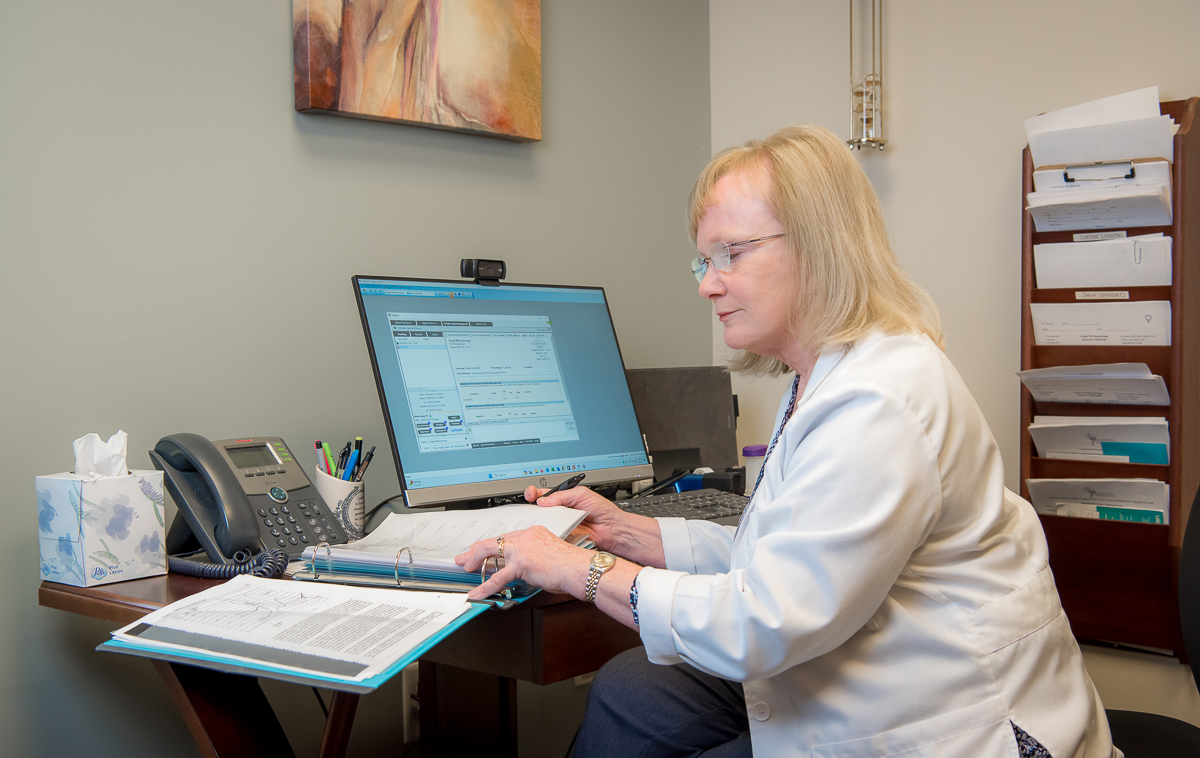
Summary: Hormone therapy is not as simple as zapping an infection with an antibiotic. Check-ups are needed to prove or disprove the initial diagnosis and recommendations and make minor adjustments as needed. In this article, I’ll explain why it’s important to follow this process and the additional health benefits you may experience from hormone therapy.
Unless you have a relatively minor condition or injury that can be diagnosed conclusively through testing or physical examination, or it’s just a common ailment that has to run its course, most visits to a doctor require follow-up visits.
Hormone therapy for perimenopausal women dealing with uncomfortable symptoms is no exception. The effectiveness of treatment, potential side effects, and the overall health and progress of the patient need to be monitored and evaluated.
Let me walk you through the process of hormone therapy, beginning with our first conversation, and explain how ongoing check-ups help you achieve the best results.
The Initial Consultation and Testing
I spend most of this time listening and taking detailed notes. You tell me about your symptoms and I try to categorize where they would fall – low estrogen, high estrogen, low testosterone, etc. This process helps me to form an initial impression of your issues.
Then I recommend lab work to confirm my clinical impression. Hormones are still changing in perimenopausal women, which is why timing during the menstrual cycle has to be perfect for test results to provide useful information.
Once I see the data, I share the results and my recommendations. We can usually do this through the patient portal instead of making you come back to the office. If you feel comfortable with my recommendations, I send in a prescription, and you start the program.
Medicine Is Not Always an Exact Science
The initial consultation and testing enable me to form a hypothesis. Follow-up is needed to prove or disprove the hypothesis. Also, hormone levels will change over time during the perimenopausal transition, so the solution for right now might not be the long-term solution.
The First Check-up
The first follow-up visit is typically scheduled in two to three months. The most important question to address during this visit is whether your symptoms are better, worse, or about the same. I ask a whole cohort of questions to address what you told me during our first appointment.
If you’ve improved, have you improved enough? What are your concerns? The solution I’ve recommended might be working, but I want to make sure you have the best solution. Maybe the hot flashes are better, but you’re still having trouble sleeping.
I’ve found that the lowest dose of the estradiol patch often, but not always, is enough to alleviate symptoms. It may not be enough for complete symptom alleviation, and the dose can be adjusted as needed for the best symptom relief. There are five dosage levels of the patch, and minor fine tuning can make a big difference.
I also ask if you’ve had any side effects like breakthrough bleeding or spotting. We can order new lab work to address uncertainty, but this is often unnecessary.
If you’re happy with the results, you can get refills for a year without another check-up. If you’re on testosterone, I need to see you every six months due to Drug Enforcement Administration (DEA) rules.
If adjustments are needed, we check in again in two to three months.
Tracking Hormone Therapy Health Benefits
Beyond addressing symptoms of perimenopause, many people are pleasantly surprised at the positive impact of hormone therapy on a wide range of bodily functions.
For example, estrogen can reduce the risk of heart problems, colon cancer, and Alzheimer’s, support better cognitive function, improve skin and joint health, and reduce pain during intercourse. Estrogen can also help preserve bone density for people with osteoporosis or osteopenia.
Follow-up visits provide a fuller picture of how hormone therapy has improved your health. If you have osteoporosis or osteopenia, we can test your bone mass to see if bone loss has slowed.
If Hormone Therapy Is Working, Keep Doing It
There’s a myth in the healthcare establishment that you should stop hormone therapy after five years. Generally, the only reason to stop would be if you’re diagnosed with a hormone-sensitive cancer, like endometrial cancer or breast cancer.
Research from The Menopause Society says that if you feel better on hormone therapy, you can continue as long as you like and enjoy the health benefits. The Menopause Society is a great resource for the truth about hormone therapy.
Just make sure you schedule at least annual follow-up visits with your hormone therapy doctor to make sure you’re on the right track!