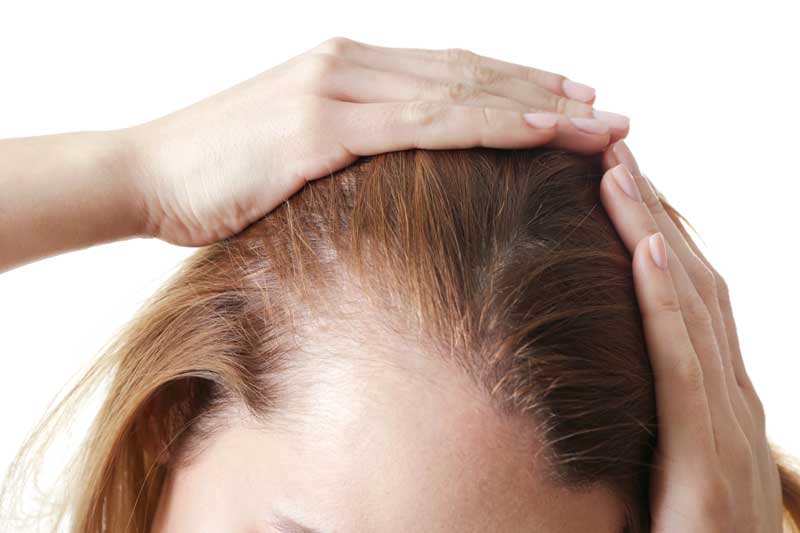
It’s not uncommon for patients to say they’ve noticed hair thinning caused by the actual thinning of hair shafts rather than the loss of hair follicles. However, some patients have reported losing clumps of hair as well.
There are many causes of thinning hair in women, from aging and genetics to stress and autoimmune disorders. However, a hormonal imbalance – specifically, the drop in estrogen levels during menopause and the remaining testosterone – can contribute to thinning hair and hair loss.
This is a touchy subject in clinical practice. I’ve seen patients who are experiencing hair loss and thinning but aren’t necessarily complaining about it. Because women often feel self-conscious and even embarrassed, many doctors won’t bring it up, which prevents patients from receiving effective treatment like hormone therapy.
Why Do Hormonal Imbalances Cause Hair Thinning?
Without getting too deep into the science, a decline in estrogen and progesterone can shorten the growth phase of hair while lengthening the resting phase, which is when hair sheds.
The combination of the two slows the rate of new hair growth, contributes to hair loss, and causes hair follicles to become thinner, creating the appearance of lower volume of hair and more distance between hairs.
What You Can Do to Reduce Hair Thinning During the Perimenopausal Transition?
The first thing we recommend at Chapel Hill Hormone Therapy is testing thyroid function and ferritin levels. Low levels of ferritin, the protein that stores iron, can be associated with hair loss. Low ferritin levels can be caused by gastrointestinal disorders, cancer, heavy menstrual periods, and other conditions. In this case, an iron supplement can help restore hair growth.
When thyroid tests come back normal and the cause isn’t as simple as iron deficiency, hormone therapy may be helpful.
However, a very low dose of minoxidil, the drug used in Rogaine, can help perimenopausal women restore hair growth and prevent thinning. Developed in the lates 1950s, minoxidil was first used to treat ulcers and high blood pressure. Interestingly, doctors noticed that many patients developed excessive hair growth, which led to minoxidil being approved in 1988 to treat baldness in men.
A much smaller, inexpensive dose of minoxidil can help regrow of hair in perimenopausal women without the undesirable side effects. Minoxidil is taken orally instead of using a topical lotion application like Rogaine.
If you’re experiencing hair thinning or loss during the perimenopausal transition, don’t accept this change as a normal part of aging, and don’t allow your concerns to be dismissed. We can help you identify the root causes of hair thinning and loss and recommend safe, effective treatments that help you restore your confidence and get your mojo back!
If you live in North Carolina, I can help you via a tele-health appointment. Contact Chapel Hill Hormone Therapy and schedule an appointment today!