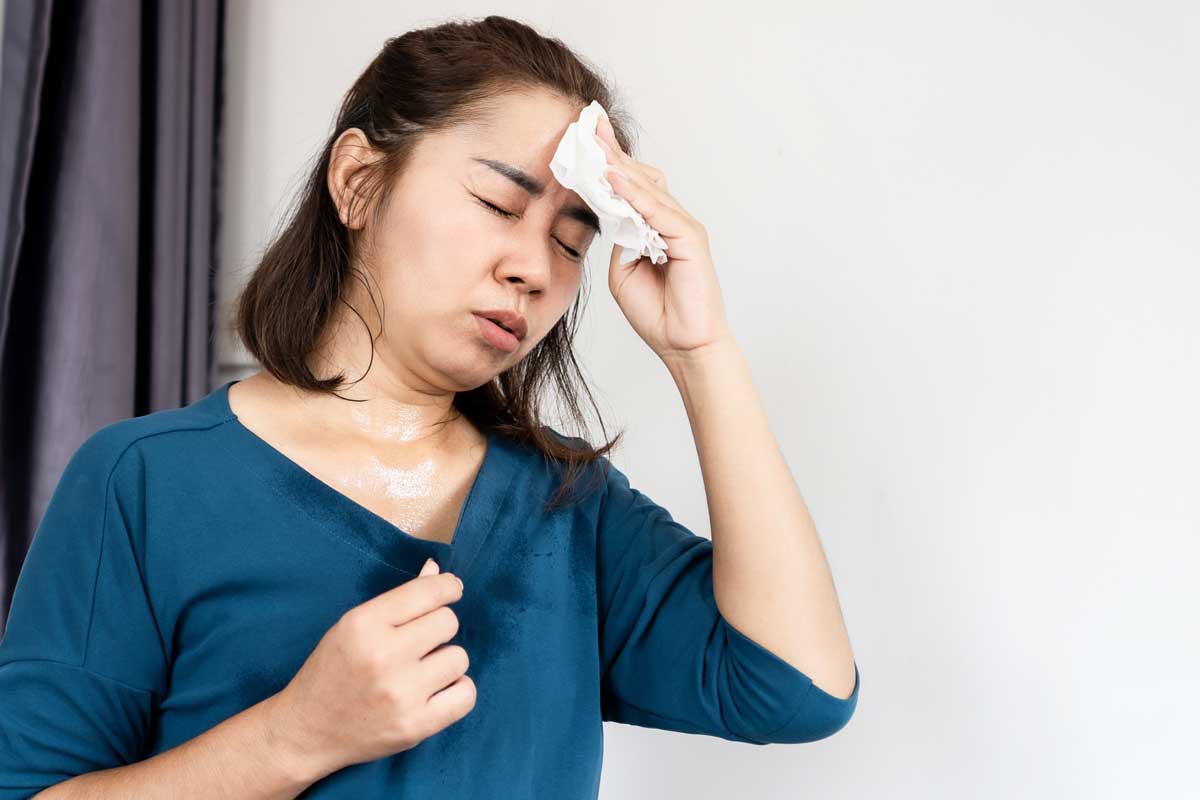
Summary: The heat, humidity, and long days of summer can make symptoms worse for menopausal and perimenopausal women, causing hot flashes and night sweats. However, contrary to popular perception, low estrogen is not always the problem. In this article, we discuss why symptoms can get worse, why hormone testing is important, and the types of hormone treatment depending on your specific circumstances.
I see menopausal and perimenopausal women who tell me they made it through the winter months by having their own “personal summer.” Once summer really starts, however, symptoms can be extremely disruptive.
For example:
- Longer days – about 14.5 hours of daylight in June vs. about 9.5 in December in North Carolina – and hotter nights can result in poor sleep as a result of hormonal fluctuations that take a physical and emotional toll.
- Social activities, prolonged sun exposure, alcohol consumption, and even spicy foods can contribute to hot flashes to some degree.
Most people automatically assume estrogen levels are low. Some doctors will even prescribe estrogen without testing first. Although low estrogen levels could very well be the cause of worsening symptoms, that’s not always the case.
Why Menopause and Perimenopause Symptoms Can Be Worse During Summer
The ovaries function erratically during perimenopause. At times, they don’t produce enough estrogen – or they produce too much estrogen. The resulting imbalance seems to be associated with temperature fluctuations.
With perimenopause and menopause, the body’s thermostat in the hypothalamus of the brain has a very narrow range that feels comfortable. When there’s instability in the hypothalamus from a lack of estrogen, the body will perceive that it’s too warm.
That’s when you start to see unpredictable heat dumps that cause hot flashes. Because of the narrow comfort range, a fluctuation of just a few degrees may be enough to trigger a heat dump.
Not Enough Estrogen? Too Much? Or Something Else?
Estrogen deficiency gets top billing when it comes to summer symptoms, but many people who have too much estrogen relative to progesterone can have the same symptoms, which is often the case during perimenopause.
Suppose you’re experiencing night sweats and hot flashes. If your estradiol level is 60-100 pg/mL or higher, that is generally considered solid. However, the progesterone level could be low. In this case, progesterone treatment would be beneficial and estrogen treatment would not.
I’ve also seen women who have low estrogen levels and low progesterone levels. This is why hormone testing is an important first step rather than assuming low estrogen is the culprit.
Types of Hormone Therapy
For women with low estrogen levels, we typically recommend transdermal estrogen, or an estradiol patch, because it’s better for the body to receive estrogen through the skin than the stomach. For women with low progesterone levels, we typically recommend an oral capsule that’s taken at bedtime. Progesterone can also act as a mild sedative and anxiety reducer, which can help you fall asleep and stay asleep.
For women with low progesterone levels, we typically recommend an oral capsule that’s taken at bedtime. Progesterone can also act as a mild sedative and anxiety reducer, which can help you fall asleep and stay asleep.
Are Symptoms of Menopause or Perimenopause Affecting Your Quality of Life?
If you’re feeling the effects of hot flashes, night sweats, and other symptoms, and they’ve gotten worse since summer started, schedule an appointment with Chapel Hill Hormone Therapy. We’ll help you get to the source of the problem and order appropriate testing if needed.
Remember, you don’t have to accept diminished quality of life as just a normal part of being a woman. Let us help you get your mojo back!